Click image below for more "still life"

Click image below for more "still life"
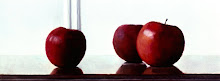
Francis Cunningham "Three Baldwin Apples" (1964) Oil on linen 5'' x 16''
Showing posts with label painter. Show all posts

Thursday, September 19, 2013

Behind the Scenes with a Pair of Paintings
Reaching (Regina) and Reaching (Peter)


This week we will begin exploring a pair of paintings, Reaching (Regina) and Reaching (Peter).  As we have already explored the behind the scenes of Reaching (Regina), this week we will begin with Reaching (Peter). In following weeks we will take an in depth look at the role anatomy plays when painting figures.

They were not planned to be a pair of paintings.  Francis recalls being in his studio working on Reaching (Regina). When Peter saw the nearly finished painting, he laid down on the floor and took the pose you see in the painting. He took this pose as a natural response to the pose Regina was in.

Knowing the background on Peter may help to understand the acting out of his response to the painting as contrasted to a verbal description of what he was experiencing when he saw the painting.  In his younger years, Peter was an athlete. When he was in his early thirties he had a stroke that left him almost entirely paralyzed on his right side. If you look closely at his right arm and his right leg in the painting , you can see that they are not quite normal.  What you are seeing is not a mistake in the painting, it is capturing the truth of a particular model.

The stroke also affected Peter’s speech. He could no longer talk in words, he could only make guttural sounds to indicate yes, no or maybe.  These sounds are how Francis and Peter communicated. Peter is a very intelligent man and during his posing Francis conversed with him on a variety of subjects from philosophy to politics, literature and other subjects.  Francis continues to be amazed at the depth of the conversations they had with Peter’s limited means of conversation.  There was, in fact, much he could say with the expressions of his face and body and the inflections he would impose on the sounds he made to express his meaning.

One of the most important observations about Peter is that he is, like Regina, an anatomically functional nude.  Both figures appear able to get up and change pose. They are not locked into their position on the canvas. In general and in most paintings you will find that the figure is fixed in its position by gravity. For example, this may happen because the painting makes clear that the body is standing on the floor or seated in a chair or that an arm rests on a piece of furniture.

In Reaching (Regina), the figure is seen from above and is more directly lying flat on the floor than is Peter in his pose. He is in an unusual position. He is not positioned fully on his side - there are rotations. There is no definitive point where the disposition of his pose has been fixed. Taking this into consideration, you can turn the painting upside down or on   it’s edges and make an entirely different observation about what the subject is doing within the painting.

When John Walsh, former Director of the Getty Museum, first viewed Reaching (Peter), Francis turned the painting on it’s four  edges. Walsh was amazed at the impact he felt seeing the figure in a different position. 


When the painting was turned 90 degrees so  Peter's back faced up, Walsh remarked, "he’s just flying through the space!"  In this position you are no longer viewing a man lying on the ground, partially crippled, reaching out. Walsh remarked how his attention was drawn to the designs and shapes that occur at the back of Peter's right knee and on his left leg, to the shapes on the sole of the foot.

"How often do you stop to look at the sole of a foot?", Walsh asked. The anatomically functional nude is able to accomplish these different things but a painting or sculpture is of course static, so viewers will have to use their imagination empathetically to identify with the figure's immediate presence and with its ability to change positions.


With most of Francis’ paintings the figure is to some degree anchored by the nature of the pose. If a figure standing on the floor is turned upside down there still will be this figure standing on the floor, but seen upside down. With Peter, as you turn the painting, you will notice how completely he changes.  You see him first in his reaching pose and then as you turn him, so his back is facing up, he seems to be flying and what is a purple drapery on the floor becomes a cape. Turning the painting once again, he seems to be plunging with velocity downward.


The notion of asking the viewer to empathetically allow an anatomically functional figure to get up and move around was not a part of the requirements for a nude figure in classical art. The Greeks who could make the gods take human form were not concerned with this concept nor was it a concern in the Renaissance, where figures are designed to take their place on the canvas in an idealized form.

Francis regards these two paintings of Reaching (Regina) and Reaching (Peter) as expressions of what the anatomically functional bodies of a particular man and woman can accomplish today.  They bring an immediacy to the body and the human figure because of their potential for changing position and so Francis suggests they are not separated and apart from our space. They are in the room with you. While the viewer always seeks to bring a painted or sculpted figure to life, this particular kind of presence would not happen if these figures were not anatomically functional.

Next week, we will begin to delve into anatomy and the role it plays when painting figures. 

Come meet Francis in person at the Masters Exhibition Opening Reception, at the Century Association on October 2, from 5pm - 7pm. Just email fc@franciscunningham.com to receive a personal invitation from Francis.

Tuesday, June 21, 2011

Mixing Color with Francis Cunningham

Two weeks ago we started a new video series in which Francis Cunningham will introduce technical basics of painting. Our first installment was on mixing color.

Wednesday, May 18, 2011

Looking at Simon Dinnerstein's work with Francis Cunningham.

If you've been following this blog from the beginning, you know that we've been covering mostly Francis Cunningham studio work and exhibitions in our videos.  However, recently we've ventured out to cover more.  We started with a group exhibition at Westbeth, Grid/ Off the Grid in this video and this blog entry. We liked our readers' and viewers' reactions as well as enjoyed expanding our repertoire to covering painters Francis Cunningham enjoys. We've been inspired to do this by the tireless efforts of  James Kalm aka Lornen Munk to cover NY gallery scene in video reports. You can find his ouvre as a "reporter on a bike" here and here. We can only dream to be as prolific as him, and while we can't do that, we can cover more of the unchartered territory of more traditional painting, which James Kalm sometimes covers himself.

Here is Francis Cunningham at Tenri Gallery walking through the exhibition of Simon Dinnerstein, a gifted draftsman/ painter, discussing his large scale paintings and drawings. Before you look at the video, here is his website.  And below is our video report. Don't be deceived by the video's top image of Paulus Potter's painting, which is going to change in the next 24 hours,  it's all about Dinnerstein!

Wednesday, April 6, 2011

New Three Figure Piece Opening Sequence (Video)

Francis Cunningham has just recently completed a major figure piece, which he's worked on with a model from December 2009. We announced it here and reported on the process here.  We've been documenting the process, between the painting sessions, on video and today we have the opening sequence of our 40 minutes video ready to share on YouTube.  Like a true painter's video, it'll be worked on for a while, but today, it wants to get out, at least in a small part.


Wednesday, February 16, 2011

Three Figure Piece Finished & Jerry Saltz's Abstract Manifesto

Since December 2009 Francis Cunningham has been working on a large, three-figure painting and today was the day he reached the final stage.  Today was also the day his model, who modeled for two of the three figures, was here probably for the last time.
I've been documenting the painting process in photographs and video, staying away from the studio, having Francis talk about the painting when the model was not here. Today we added a major amount of footage and the editing will begin very soon.


Some of the issues I've heard about from Francis that related to the just finished work as well as his life work in general was "abstraction" as a tool in representational painting. Color spots technique, the use of limited and specific palet are just the most immediately striking "abstract" tools in my view in the case of Francis Cunningham works.  He's some more to say about it in the long video we're making. Visit his YouTube channel here, to watch the growing collection of video commentaries by Francis Cunningham.

Aching to make a blog entry after a long hiatus here, I'd inadvertently brought it about by showing Francis, related to our talks about abstraction, “The Jerry Saltz Abstract Manifesto, in Twenty Parts." This telling manifesto, which struck a chord with Francis Cunningham, is an answer to a seemingly simple question, posed by a reader of Jerry Saltz's art column in New York Magazine. The manifesto has been circulating Facebook, Twitter and art blogs. You can read it in the magazine here along with two other another questions and answers, or below:


Dear Jerry,

Over the past few years, I've noticed a lot more abstract art being made, and I often find myself stymied by something a little bit embarrassing. Jerry, is abstract art for real? I mean, I often don't really get it. Isn't it just smudges and stripes and squares and stuff?
—Embarrassed
Dear Embarrassed,
You are not alone. I too have heretical thoughts like yours. It can also take 30 years to understand why an all-white painting by Robert Ryman or a pencil grid on canvas by Agnes Martin is art.
I can't tell you what abstraction is, but I can tell you a number of things that I think that it allows artists to do. What I say about abstract art could also be applied to representational art. With that in mind here's “The Jerry Saltz Abstract Manifesto, in Twenty Parts."
1. Abstraction is one of the greatest visionary tools ever invented by human beings to imagine, decipher, and depict the world.
2. Abstraction is staggeringly radical, circumvents language, and sidesteps naming or mere description. It disenchants, re-enchants, detoxifies, destabilizes, resists closure, slows perception, and increases our grasp of the world.
3. Abstraction not only explores consciousness — it changes it.
4. All art is abstract. A painting of a person or a still-life is a two-dimensional representation of three-dimensional reality and therefore infinitely abstract. Whenever an artist sets out to make something it turns into something else that he or she could never have imagined or predicted.
5. Think of an abstract painting as very, very low relief — a thing, not a picture.
6. Abstraction exists in the interstices between the ideal and the real, symbol and substance, the optic and the haptic, imagination and observation.
7. Abstraction brings the world into more complex, variable relations; it can extract beauty, alternative topographies, ugliness, and intense actualities from seeming nothingness.
8. Abstraction, like ideas, intuitions, feelings, and life, is not mimetic.
9. Abstraction is as old as we are. It has existed for millennia outside the West. It is present on cave walls, in Egyptian and Cypriot Greek art, Chinese scholar rocks, all Islamic and Jewish art — both of which forbid representation. Abstraction is only new in the West.
10. Abstraction gained ground in Western art after centuries of more perfected systems of representation. By the mid-nineteenth century, representation felt like a trap, and seemed empty, false, or limiting. A similar situation existed in the early aughts, after artists of the nineties re-deployed realisms in numerous ways. The field appeared closed off for younger artists. That’s why contemporary artists have not only begun to reexplore the possibilities of abstraction, they’re shedding much of the Greenbergian cant and academic-formalist dogma that attached themselves to it over the last 50 years. Abstraction is breaking free again.
11. Abstraction offers ways around what Beckett called “the neatness of identification.”
12. Rothko’s glowing floating rectangles of color are more than abstract patterns. They are Buddhist TVs or what Keats called “good oblivion. One sees what nothing looks like in them. They make you ask, “What light through yonder painting breaks?” (Now do you see how full emptiness and abstraction can be?)
13. Abstraction is just a tool. It is no less “real” than philosophy or music.
14. Abstraction is something outside of life that allows us to be present at our own absence or alternatively absent in our own presence.
15. Abstraction creates patterns of meaning and its own extremely flexible intricate syntax. It is astral synthesis.
16. Abstraction teeters on making empty gestures while also making deep statements.
17. The camera was supposed to supplant painting but didn't. Instead, painting — ever the sponge, always elastic — absorbed it and discovered new realms.
18. Abstraction may speak in a sort of intra-species visual-electronic-chemical-pheromonal code, creating optical-cerebral networks and wormholes, organic maps of unknown yet familiar territories, may have a kind of plant intelligence that allows it to grow, proliferate, flower, change directions, and survive relentless aesthetic predation from a lay public.
19. Abstraction contains multitudes.
20. I’ve left out No. 20, because I want to hear your opinion: What else does abstraction do that’s special? Comments are open below.
By Jerry Saltz


Francis Cunningham has yet to add #20 as invited by the author above.


Thursday, May 13, 2010

Arthur Cohen & Francis Cunningham Exhibition, May 2010 in Red Bank NJ


Those who could not make it to Francis Cunningham and Arthur Cohen "The Landscape Cape Code and the Berkshires" show's opening reception at Laurel Tracey Gallery last weekend, we managed to glean some images from the gallery and a guest and bring your a slideshow.  Click here for the slideshow. You can also see the exhibition at the gallery until May 20, 2010.
Laurel Tracey, Francis Cunnigham, Arthur Cohen, Kitty Cunningham before the show in the gallery.

Arthur Cohen, who is showing Provincetown Harbor paintings in the exhibition, just like Francis Cunningham studied with Edwin Dickinson, although at an earlier time.  Laurel Tracey Gallery page says the following about Arthur Cohen, his style and technique:

Cohen's sweeping panoramas of Provincetown Harbor are developed from storied layering and scraping - thin levels of paint build up over a day. week, or even over several years, referred to by Cohen as the "ghost" in his painting. It is this "buried" sense of time and continuity that evokes a sense of timelessness and spatial infinity. Working with a focused palette of blues and grays, occasionally some pink and green, Cohen repeatedly brings the viewer a synthesis of light from different moments;

Keeping in mind the common denominator, it is interesting to see the difference and similarities between the two painters' work in this exhibition.

Thursday, April 1, 2010

Still Life with Basket Gourds and Oranges (1967)

From the figure we're turning to still life, in particular to Still Life with Basket Gourds and Oranges (1967) oil on linen 34 x 40 in. 
In part one of the video Dick talks about the root of painting being a lived experience.


In part two we take up composition on the flat surface and in depth.


In part three we consider light, flatness and space.


...and all of it with a dash of Cezanne and a few others.

Wednesday, March 10, 2010

Francis Cunningham has a Fan Page

Please join us on Facebook, if you're using it.  We'll be re-posting our blog and video entries there as we produce them, and more.
http://www.facebook.com/pages/Francis-Cunningham/359488671282

Friday, March 5, 2010

Further Thoughts on the Nude: The Relationship of the Contemporary to the Classical (Part 2/3)

Continues from part 1
                     Francis Cunningham Mimi Scherb (1971) oil on linen 50 x 32 in.


Returning to what is necessary in the making of an anatomically functional nude, you will need not one station-point, as with the conventional camera, but many, as in motion pictures or video. The difference is that in painting and sculpture multiple station-points are incorp
orated in one image in which the eye of the viewer does the moving whereas in motion photography multiple station-points occur by means of many images over time. In painting the life-sized figure, John Singer Sargent said you must draw it as if it were a mile away and paint it as if you were on top of it. That is because seen from a mile away (infinite distance) the parts of the body appear in their actual proportional relationships without visual distortion, whereas the color-value relationships that express the body’s forms only can be seen from close up.

Francis Cunningham Dancer - Regina (2003-04) oil on linen 77 x 54 in.

The way the artist overcomes this apparent incongruity – the body viewed simultaneously from a mile away and close up – is by employing multiple station-points in drawing or sculpting the figure. This is done by changing horizon lines and moving to the left or right of the principal vertical axis, so as to communicate the actual proportional relationships of the parts of the body one to another. It is a process that cannot be accomplished by measurement alone; it requires from the artist in addition to seeing, knowledge, and above all, empathy. The body has to feel right, and if it feels right it is right.
                                     Francis Cunningham Jeff (with skull) (1985) oil on linen 66 x 58 in. Private Collection

Francis Cunningham Sharon (with pelvis) (1986) oil on linen 76 x 56 in.

With measurement – the pencil held at arm’s length or the caliper – as with every other aspect of painting or sculpture, if you look uncomprehendingly at nature to provide answers to the questions you pose you will not find them. The process of transcribing and presenting multi-dimensional experience onto a flat surface or into a block of stone, plaster or bronze is man-made and has no counterpart in nature.  
        What Sargent did not have in his painting vocabulary was the complete abandonment to visually observed color-value developed by Charles Hawthorne (1872-1930) and taught by Edwin Dickinson (1891-1978) to all of us who studied with him.
                                                                     Charles Hawthorne The Italian Girl (1910) 20 x 16 in.
                                 Edwin Walter Dickinson Sheldrake Winter (1929) 29.9 x 25 in.

Within this training, what continues to be the subject of discovery and exploration for me is the fact that observed color-spots will create tangible sensations of three-dimensional form and space. The reason for this, I believe, is not difficult to discern. Our eyes are extraordinarily sensitive in discriminating among the differences in tone, both far away and close up.
Looking out over a valley several miles away we can tell the difference in greens between a stand of pine and a stand of hemlock, a stand of white ash and a stand of maple. In nature the color-spots which the artist will abstract, appear to lie in space. They are waiting to be seen, their relationships to be abstracted and, as color-spots, placed on the flat surface of the canvas. Through these observed color-values space is described and we are drawn into that space. 
                                            Francis Cunningham Limestone Farm, Sheffield  (1973) 32 x 50 in.

              On the other side of the coin, close up, the perceived color-spots appear to lie on three-dimensional forms. Onto the flat surface of the canvas the artist abstracts the relationship of these color notes, duplicating in painting the information the eye needs to perceive three-dimensional form. 
                                                               Francis Cunningham (work in progress March 2010)
Like black magic, these perceived color-spot relationships on the canvas communicate sensations of sculptural form. Bernard Berenson referred to such ideated sensations of form as tactile values, considering them along with movement and space composition, to be at the forefront of qualities essential to the figure arts.
We have today a tool for creating sensations of form and space that has hitherto only been hinted at in Western painting. To be sure, working with the changing light of out-of-doors makes the painting process more complex in landscape than in the studio, but not impossible. 
Sheridan Lord Landscape, Autumn (1974) 40 x 70 in. The Parrish Art Museum, Bequest of Joseph Fox

Compare distant space in a contemporary painting with how space is achieved in the Mona Lisa, in which it is suggested by conventional means – darker and clearer in the foreground, atmospherically more blue-gray and lighter as the distance recedes. Space is not continuous – there are in Renaissance art, zones of space – foreground, middle ground, background. 


                            Raphael, Alba Madonna, oil on panel transferred to canvas, c. 1510 (National Gallery of Art, Washington D.C.)
You are looking through a window. From the Venetian painters through the 19th century, with occasional passages of what might be called color-spot painting in the precursor plein-air painters including Corot and the Impressionists, the means for creating sensations of space have been primarily conceptual and a matter of convention – perspective, scale, overlapping planes, contrasting masses of tone – not observed color-value. Observation, with the Impressionists, passed through the prism of a particular way of representing the effects of light, as conventional in its own way as is the perspectival space of the Renaissance. 
                                          Francis Cunningham Chime Knife and Barking Spud (1970) oil on linen 28 x 44 in.
 Let us not forget that space is a property of nature which we all experience and which is there to be dealt with, deep or shallow. With still life the actual depth of space may be no more than two feet.
Francis Cunningham Highwood (1985) 50 x 86 in. Private Collection.

      I have discovered empirically that one can read space in a color-spot landscape or still life at a greater distance from the painting than in European paintings of the past. I have been a hundred yards from a large landscape canvas, still able to comprehend its space, whereas at this distance a painting in earlier techniques would read as a piece of colored cloth.
Francis Cunningham Moment  (1989 and 2004) oil on linen 108 x 78 in.
      With the nude it is the same. One can be at a distance of one hundred feet and more and the forms of the life-sized nude will read like sculpture. At this distance the sculptural qualities of an actual human being would not be apparent for they are dependent on perceptible halftones which in nature are confused or lost at such a distance. In the nature, the figure would appear to the eye as blobs of color, as in an Impressionist painting. What is the significance of this? We may be reminded that the distance from floor to ceiling in the Sistine Chapel is 65 feet and that to make his figures intelligible, Michelangelo had to enlarge them in scale, using Florentine methods of coloration then current in order to make his shapes discernable.
There are occasionally passages of what constitutes color-spot observation in Velasquez and Eakins, but as with the plein-air landscapists these are incidents within a conventionalized whole. With Velasquez, granted the acuity and detachment of his observation, the conventions he uses are those of Baroque painting. 
                                                            Velazquez Luis de Gongora y Argote (1622)
                                                                        

With Eakins one may say much the same; his conventions are those of Gérôme’s studio.
Any and all of these assertions should be tested empirically, as I have done with my own life-sized nudes, landscape and still life, and to a lesser extent with those of others. Specifically, I have placed my work alongside several American 19th century landscape paintings as well as portraits by Chester Harding, examining viewing distances with regards to the intelligibility of form and space. But most convincingly, in a lifetime of teaching I have watched the values of form and space emerge from the color-spot paintings of beginners. 
                                              Francis Cunningham Karen (1972-73) oil on linen 60 x 26 in. Private Collection.
Next Part 3 of 3

Saturday, January 23, 2010

Designs within Design


Yesterday was supposed be our video editing day- finish another portrait- but we started late and decided to make a short pretty unedited video about the concept of "designs within the design."  The idea of the designs with design define quite well, although not completely, Dick's painting process.
So, for the video, using one of his older, small, premiere coup landscapes, which he had used to create a background for a large nude of Tom Johnson- whose video portrait is coming soon- Dick illustrates how a viewer's eyes enter the painting through the edges of the painting. He flips the painting to its sides and upside down to analyze the framing, a great, simple tool in painting, photography and critical tradition, to get a better sense of space and the painting's compositional organization.
He then moves to another painting, the work in progress, the three figure piece, and reveals a stages in his color-spot process and the way he arrives at designs within the design of the picture as a whole.

Friday, December 18, 2009

The End Game Never Ends, and Self-Portrait

While I'm editing portraits, Dick is among other projects working on the three figure painting, which yesterday got its first spots of color. He's also touching up some nudes that we'll video very soon.


And then the most novel and fun for me at the moment, Dick has been pulling out various paintings from years ago which exhibit such variety of style. One of such paintings is a self-portrait as a "married buck right out of art school" with some early painting in the background done from the head, not nature.

Tuesday, September 1, 2009

Weekend of August 22nd: Perke and Dick in the Berkshires

Despite the "micro burst" storm that tore through the Berkshires area and despite merciless mosquitoes, we managed to do quite a lot of work with Dick. I took scores of photos of the barn, of the outside and inside, but especially the studio. Here is the set and here the slideshow, to see almost all of the work and fun in photos an videos. Not yet ready is a longer video, which I'm beginning to edit now.
Talking with Dick about the still life he's currently working on demystified a lot of painting process for me and I hope to show Dick elaborating on it in our video.
This is part of the still life set up, of which only a fragment is visible on the canvas and on the "map."
8.21.09
The rest of the set-up. The dried fruit is a beauty.
8.21.09
Finally, an attempt by me to capture the whole of the setup with my still camera, as it is on Dick's canvas.
8.22.09
Something, I'd not known about Dick's painting process is "the map." He starts his longer projects with a map like this, transfers it to a canvas and then begins his "color spot" painting process. (The many maps that got saved would look great strangely as a B&W graphic novel, in my opinion.) The "color spot" process that Dick uses justly attracted attention of my companion to the Berkshires, partner at NY Art Beat and husband, Kosuke who brought attention to it on his Japanese blog. He touched upon the subject of the technique and wrote in general about our trip and some of the anecdotes that Dick is so good at telling.
8.22.09
Here is the yet unfinished still life on canvas.
8.22.09
When not working on our video and photos, or enjoying a few meals prepared by Kitty, Dick showed us around the area where he's been coming to paint every summer since the 60s. So, here is Perke and Dick by one of the pear trees.
8.21.09
I'm taking the the pear to the barn and then to NY. It was good after a few days of sitting on my fridge.
8.21.09
Walking through the swampy area in the back, from which we had to eventually withdraw, because my shoes were not ready for such an adventure and mosquitoes were biting strong.
8.21.09
At the falls, which Dick claims he used to run to daily after a day of work to cool off. We drove, due to the unstable weather and the mosquitoes.
8.21.09
Saturday afternoon in the barn- resting with tea before Kosuke and my leaving for NY- after a lunch of Sheffield corn, sandwiches and some wine which we'd bought for early Friday dinner in the barn. The dinner was supposed to be followed by Dick and Kitty's trip to a ballet by Ulysses_Dove. All of it was literally cut short by the storm. With the power and telephone out, we made the most of the evening by driving to the nearest restaurant for a good meal and plenty of anecdotes.
8.22.09

Friday, July 24, 2009

New Text: A Vision of the Nude (Abridged for Linea)

We've decided to delete one of our earlier entries containing the essay A Vision of the Nude by Francis Cunningham, because it's too difficult to read as one block of text. At the same time Dick has recently ironed out a more readable version of A Vision of the Nude (Abridged for Linea), which I put up on his website in place of the older version. Enjoy the read. Let us know if you have questions or comments. Dick will try to respond in some form.

"The lack of rigorous training directed toward a specific visual goal – the nude – combined with a view of humanity that saw the model as more than a studio prop for learning to draw, paint and sculpt, led my sculptor colleague, Barney Hodes, and myself to develop new approaches. By focusing on the model, we were working on a nude that was neither idealized and classical nor modernist and anti-classical. It wasn’t a nude people expected or could readily categorize – a Venus or Apollo, say, or a Picasso or a Modigliani. It would be a different nude, and when we founded the New Brooklyn School of Life Drawing, Painting & Sculpture, Inc. (1979-82), we were on our way to articulating what that nude could be." -Francis Cunningham
excerpt from A Vision of the Nude (Abridged for Linea)

Another reason (a less important detail) to remove that previews version of A Vision of the Nude from this blog was the confusion about the authorship of the essay, due to an image of the bust of Francis Cunningham by Barney Hodes, which I'd originally used to break up the text.
Dick still thinks that the bust is a good illustration to his text.


"Francis Cunningham" by Barney Hodes

Here is another bust by the same hand of Barney Hodes:


"Mason Harding" by Barney Hodes. Photograph: by Christopher Wood