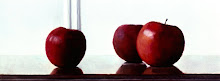
I've been documenting the painting process in photographs and video, staying away from the studio, having Francis talk about the painting when the model was not here. Today we added a major amount of footage and the editing will begin very soon.

Some of the issues I've heard about from Francis that related to the just finished work as well as his life work in general was "abstraction" as a tool in representational painting. Color spots technique, the use of limited and specific palet are just the most immediately striking "abstract" tools in my view in the case of Francis Cunningham works. He's some more to say about it in the long video we're making. Visit his YouTube channel here, to watch the growing collection of video commentaries by Francis Cunningham.
Aching to make a blog entry after a long hiatus here, I'd inadvertently brought it about by showing Francis, related to our talks about abstraction, “The Jerry Saltz Abstract Manifesto, in Twenty Parts." This telling manifesto, which struck a chord with Francis Cunningham, is an answer to a seemingly simple question, posed by a reader of Jerry Saltz's art column in New York Magazine. The manifesto has been circulating Facebook, Twitter and art blogs. You can read it in the magazine here along with two other another questions and answers, or below:
Dear Jerry,
Over the past few years, I've noticed a lot more abstract art being made, and I often find myself stymied by something a little bit embarrassing. Jerry, is abstract art for real? I mean, I often don't really get it. Isn't it just smudges and stripes and squares and stuff?
—Embarrassed
Dear Embarrassed,
You are not alone. I too have heretical thoughts like yours. It can also take 30 years to understand why an all-white painting by Robert Ryman or a pencil grid on canvas by Agnes Martin is art.
I can't tell you what abstraction is, but I can tell you a number of things that I think that it allows artists to do. What I say about abstract art could also be applied to representational art. With that in mind here's “The Jerry Saltz Abstract Manifesto, in Twenty Parts."
1. Abstraction is one of the greatest visionary tools ever invented by human beings to imagine, decipher, and depict the world.
2. Abstraction is staggeringly radical, circumvents language, and sidesteps naming or mere description. It disenchants, re-enchants, detoxifies, destabilizes, resists closure, slows perception, and increases our grasp of the world.
3. Abstraction not only explores consciousness — it changes it.
4. All art is abstract. A painting of a person or a still-life is a two-dimensional representation of three-dimensional reality and therefore infinitely abstract. Whenever an artist sets out to make something it turns into something else that he or she could never have imagined or predicted.
5. Think of an abstract painting as very, very low relief — a thing, not a picture.
6. Abstraction exists in the interstices between the ideal and the real, symbol and substance, the optic and the haptic, imagination and observation.
7. Abstraction brings the world into more complex, variable relations; it can extract beauty, alternative topographies, ugliness, and intense actualities from seeming nothingness.
8. Abstraction, like ideas, intuitions, feelings, and life, is not mimetic.
9. Abstraction is as old as we are. It has existed for millennia outside the West. It is present on cave walls, in Egyptian and Cypriot Greek art, Chinese scholar rocks, all Islamic and Jewish art — both of which forbid representation. Abstraction is only new in the West.
10. Abstraction gained ground in Western art after centuries of more perfected systems of representation. By the mid-nineteenth century, representation felt like a trap, and seemed empty, false, or limiting. A similar situation existed in the early aughts, after artists of the nineties re-deployed realisms in numerous ways. The field appeared closed off for younger artists. That’s why contemporary artists have not only begun to reexplore the possibilities of abstraction, they’re shedding much of the Greenbergian cant and academic-formalist dogma that attached themselves to it over the last 50 years. Abstraction is breaking free again.
11. Abstraction offers ways around what Beckett called “the neatness of identification.”
12. Rothko’s glowing floating rectangles of color are more than abstract patterns. They are Buddhist TVs or what Keats called “good oblivion. One sees what nothing looks like in them. They make you ask, “What light through yonder painting breaks?” (Now do you see how full emptiness and abstraction can be?)
13. Abstraction is just a tool. It is no less “real” than philosophy or music.
14. Abstraction is something outside of life that allows us to be present at our own absence or alternatively absent in our own presence.
15. Abstraction creates patterns of meaning and its own extremely flexible intricate syntax. It is astral synthesis.
16. Abstraction teeters on making empty gestures while also making deep statements.
17. The camera was supposed to supplant painting but didn't. Instead, painting — ever the sponge, always elastic — absorbed it and discovered new realms.
18. Abstraction may speak in a sort of intra-species visual-electronic-chemical-pheromonal code, creating optical-cerebral networks and wormholes, organic maps of unknown yet familiar territories, may have a kind of plant intelligence that allows it to grow, proliferate, flower, change directions, and survive relentless aesthetic predation from a lay public.
19. Abstraction contains multitudes.
20. I’ve left out No. 20, because I want to hear your opinion: What else does abstraction do that’s special? Comments are open below.
By Jerry Saltz
By Jerry Saltz
Francis Cunningham has yet to add #20 as invited by the author above.

